You can turn organic waste into valuable energy using a biogas plant, which relies on anaerobic digestion to break down materials like manure and food scraps. Microbes decompose the waste inside a sealed digester tank, producing methane-rich biogas for clean energy and nutrient-rich fertilizer as a byproduct. Safe gas collection and storage guarantee efficiency and safety, while optimizing temperature and mixing improves yields. Understanding the core process reveals how biogas fosters a sustainable energy future.
Key Takeaways
- Biogas plants use anaerobic digestion to convert organic waste into renewable methane-rich biogas and nutrient-rich fertilizer.
- Organic materials undergo hydrolysis, acidogenesis, and methanogenesis in a temperature-controlled digester for optimal methane production.
- Biogas is collected in airtight gas holders with safety valves to prevent leakage and maintain pressure.
- Produced biogas can generate electricity, heat, or vehicle fuel, reducing fossil fuel dependence and greenhouse gas emissions.
- Advanced automation and AI enhance efficiency, making biogas plants a scalable, sustainable solution for waste management and energy.
What Is a Biogas Plant? How It Works
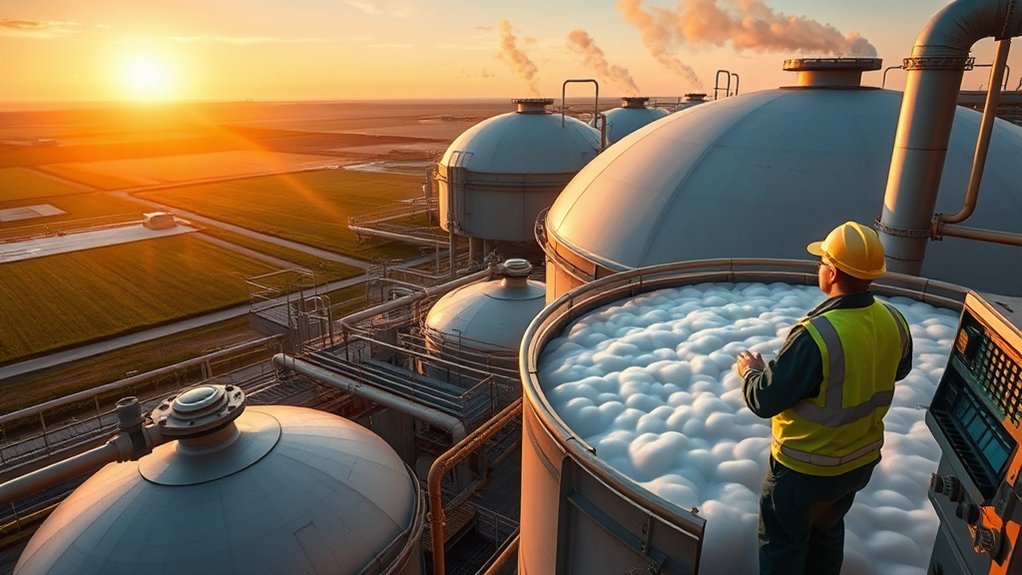
Although biogas plants may seem complex, they operate on a straightforward principle: breaking down organic waste through anaerobic digestion to produce usable energy. You feed biodegradable materials like agricultural residues, manure, or food waste into an airtight digester, where microbes decompose the matter without oxygen. This process generates biogas—a mixture primarily of methane and carbon dioxide—that you can capture and use for cooking, heating, or electricity generation. The leftover material, called digestate, serves as a nutrient-rich fertilizer. Understanding this efficient conversion process helps you appreciate how biogas plants contribute to renewable energy and waste management. Additionally, regular maintenance of biogas systems, such as plumbing and electrical checks, ensures optimal performance and safety. For detailed technical insights and operational guidelines, you can explore resources at www technicaldhirajk com, which provides analytical solutions to optimize biogas production and plant performance.
Main Parts of a Biogas Plant
You’ll need to understand the digester tank’s role in breaking down organic material efficiently. Then, focus on the gas storage mechanism that safely collects and maintains the biogas produced. Finally, examine the slurry outlet process, which handles the byproduct removal to keep the system running smoothly. Additionally, proper drainage is crucial for the biogas plant’s location to prevent any water accumulation that could disrupt the system’s operations.
Digester Tank Functionality
Since the digester tank serves as the core component of a biogas plant, understanding its functionality is essential for optimizing gas production. This tank creates an anaerobic environment where microorganisms break down organic waste to release biogas. To maximize efficiency, focus on these key aspects:
- Temperature Control: Maintain mesophilic or thermophilic conditions to enhance microbial activity and biogas yield.
- Mixing Mechanism: guarantee uniform substrate distribution to prevent scum formation and promote consistent digestion.
- Retention Time: Optimize hydraulic retention time to balance waste breakdown and biogas output without overloading the system.
Gas Storage Mechanism
Gas storage plays an essential role in managing the biogas produced within the plant, guaranteeing a steady supply for energy use or further processing. You’ll find that the storage system typically consists of a gas holder or dome designed to contain and regulate biogas pressure. This containment prevents gas leakage, maintains safety, and balances production fluctuations. The gas holder’s flexible design allows it to expand or contract based on gas volume, optimizing storage capacity without compromising structural integrity. You need to monitor pressure levels constantly to avoid over-pressurization, which could damage equipment or cause hazardous leaks. Incorporating pressure relief valves and gas meters provides control and measurement precision. By efficiently managing storage, you guarantee reliable biogas availability, which is essential for maintaining consistent downstream energy conversion or purification processes.
Slurry Outlet Process
Although biogas production focuses on gas generation, managing the residual slurry is equally critical for maintaining plant efficiency. The slurry outlet process guarantees that digested material exits the digester smoothly, preventing blockages and optimizing continuous operation. You need to monitor this process carefully to maintain system balance.
Key factors to take into account include:
- Flow Regulation: Control the slurry discharge rate to maintain digester pressure and volume.
- Separation Efficiency: Implement mechanisms to separate solids and liquids, enhancing nutrient recovery.
- Material Handling: Use corrosion-resistant pipes and pumps to handle the abrasive slurry without breakdowns.
How Organic Waste Is Converted in a Biogas Plant
You’ll rely on anaerobic digestion to convert organic waste into biogas efficiently. This process breaks down complex organic material in an oxygen-free environment using specialized microorganisms. Understanding this breakdown is key to optimizing gas production and system performance, as energy-efficient upgrades can significantly enhance the overall effectiveness of the biogas plant.
Anaerobic Digestion Process
When organic waste enters the biogas plant, microorganisms begin breaking it down in an oxygen-free environment through anaerobic digestion. This process is essential for converting complex organic matter into biogas and digestate efficiently. You’ll notice three key stages in this biochemical process:
- Hydrolysis: Enzymes break down large molecules like carbohydrates, proteins, and fats into simpler compounds.
- Acidogenesis: Acidogenic bacteria convert these compounds into volatile fatty acids, alcohols, hydrogen, and carbon dioxide.
- Methanogenesis: Methanogenic archaea transform these intermediates into methane and carbon dioxide, producing usable biogas.
Understanding these stages allows you to optimize conditions such as temperature, pH, and retention time to maximize biogas yield while minimizing inhibitory substances. This controlled environment guarantees a stable and continuous energy production cycle.
Organic Material Breakdown
Because organic waste contains diverse compounds, breaking it down effectively requires a series of targeted biochemical reactions within the biogas plant. You’ll rely on hydrolytic enzymes to first decompose complex polymers like carbohydrates, proteins, and lipids into simpler monomers. Next, acidogenic bacteria convert these monomers into volatile fatty acids, alcohols, hydrogen, and carbon dioxide. Following that, acetogenic bacteria transform these intermediates into acetic acid, hydrogen, and carbon dioxide—important substrates for methanogens. Finally, methanogenic archaea convert these substrates into methane and carbon dioxide, forming biogas. By maintaining ideal temperature, pH, and substrate concentration, you guarantee each microbial group performs efficiently, maximizing organic material conversion. This stepwise breakdown is essential for stabilizing waste while producing renewable energy, making your biogas plant a practical, sustainable solution for organic waste management.
How Anaerobic Digestion Produces Biogas

Although anaerobic digestion occurs in the absence of oxygen, it efficiently breaks down organic material through a series of microbial processes that produce biogas. You’ll find that this biological mechanism involves distinct stages where specialized microbes act sequentially to convert complex substrates into methane-rich gas.
Here’s how it works:
- Hydrolysis: Microorganisms break down complex organic polymers like carbohydrates, proteins, and fats into simpler soluble compounds.
- Acidogenesis: Acidogenic bacteria ferment these compounds into volatile fatty acids, alcohols, hydrogen, and carbon dioxide.
- Methanogenesis: Methanogenic archaea convert these intermediates mainly into methane and carbon dioxide, the key components of biogas. Additionally, sustainable living practices can benefit from the use of biogas as a renewable energy source, promoting eco-friendly solutions.
How Biogas Is Collected and Stored Safely
Since biogas is a combustible mixture primarily composed of methane and carbon dioxide, you must collect and store it using airtight systems that prevent leaks and contamination. Typically, gas-tight membranes or domes cover the digester, capturing biogas as it forms. The collected gas flows through sealed pipelines to storage tanks designed to withstand pressure fluctuations and prevent oxygen ingress, which could cause dangerous explosions. You should monitor storage pressure and temperature continuously to maintain system integrity. Installing safety valves and gas detectors helps you detect leaks early and mitigate risks. Additionally, incorporating a flare system allows you to safely burn excess gas during maintenance or emergencies. By implementing these technical safeguards, you optimize biogas recovery while ensuring operational safety and environmental protection. Regular maintenance checks are essential to ensure the integrity of the gas collection and storage systems.
Using Biogas for Electricity, Heat, and Fuel
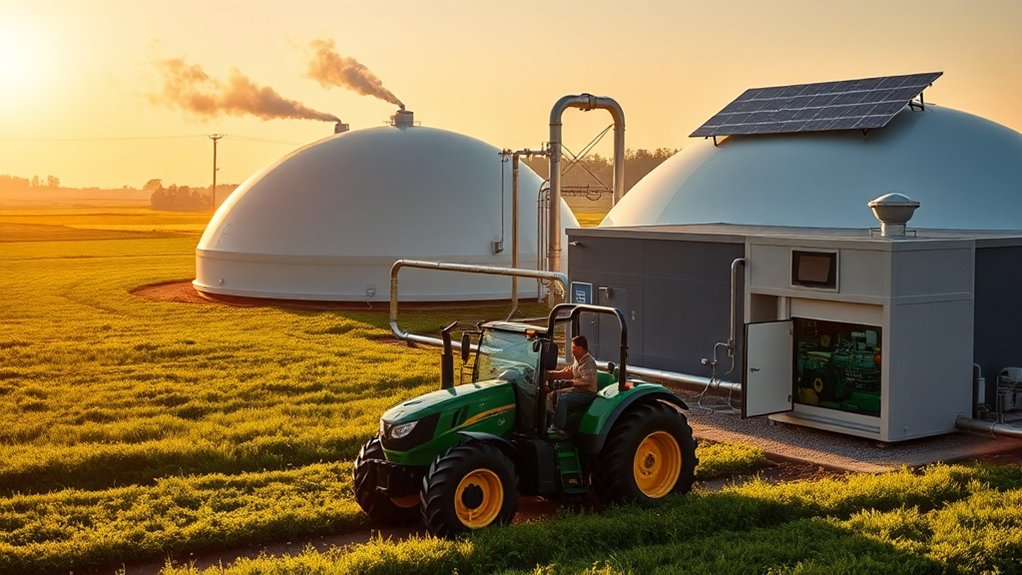
You can convert biogas into electricity using combined heat and power (CHP) systems that optimize energy output and efficiency. Additionally, biogas can be upgraded and compressed to serve as a renewable vehicle fuel, reducing reliance on fossil fuels. Understanding these applications helps you maximize the plant’s energy potential while supporting sustainable transportation. Furthermore, implementing smart maintenance solutions can enhance the efficiency and reliability of your biogas plant operations.
Electricity Generation Methods
When you harness biogas, you release multiple pathways to generate electricity, produce heat, and create fuel. To optimize energy recovery, focus on these electricity generation methods:
- Combined Heat and Power (CHP) Systems: Use biogas to fuel internal combustion engines or turbines, producing electricity and capturing waste heat for thermal applications, maximizing efficiency.
- Gas Engines: Adapt biogas in modified gas engines for stable and controllable electricity output, suitable for on-site power needs.
- Microturbines: Employ small-scale turbines that efficiently convert biogas into electricity with lower emissions, ideal for decentralized energy production.
Biogas as Vehicle Fuel
Although biogas is widely recognized for electricity and heat production, it also serves as a viable vehicle fuel that can reduce reliance on fossil fuels and lower greenhouse gas emissions. You can upgrade raw biogas by removing impurities and compressing it into biomethane, which powers vehicles similarly to natural gas. This shift not only cuts carbon footprints but also utilizes waste streams effectively.
| Feature | Benefit |
|---|---|
| Renewable Source | Sustainable fuel production |
| Reduced Emissions | Lowers CO2 and methane output |
| Cost Efficiency | Utilizes existing waste materials |
| Infrastructure | Compatible with CNG vehicle tech |
| Energy Security | Decreases fossil fuel dependence |
Environmental Benefits of Biogas Plants
Since biogas plants convert organic waste into renewable energy, they greatly reduce greenhouse gas emissions by capturing methane that would otherwise escape into the atmosphere. By using this captured methane efficiently, you not only cut down on harmful emissions but also produce a cleaner energy source. Here are three key environmental benefits you gain from operating a biogas plant:
- Significant reduction in methane emissions, a potent greenhouse gas.
- Decreased reliance on fossil fuels, lowering carbon dioxide output.
- Enhanced waste management that prevents soil and water contamination.
Additionally, biogas plants contribute to improving indoor air quality, as they can support sustainable practices that promote healthier living environments. These plants offer a practical, scalable solution to environmental challenges by turning waste liabilities into energy assets, thereby promoting a circular economy and sustainable resource management.
Challenges in Operating a Biogas Plant and Solutions
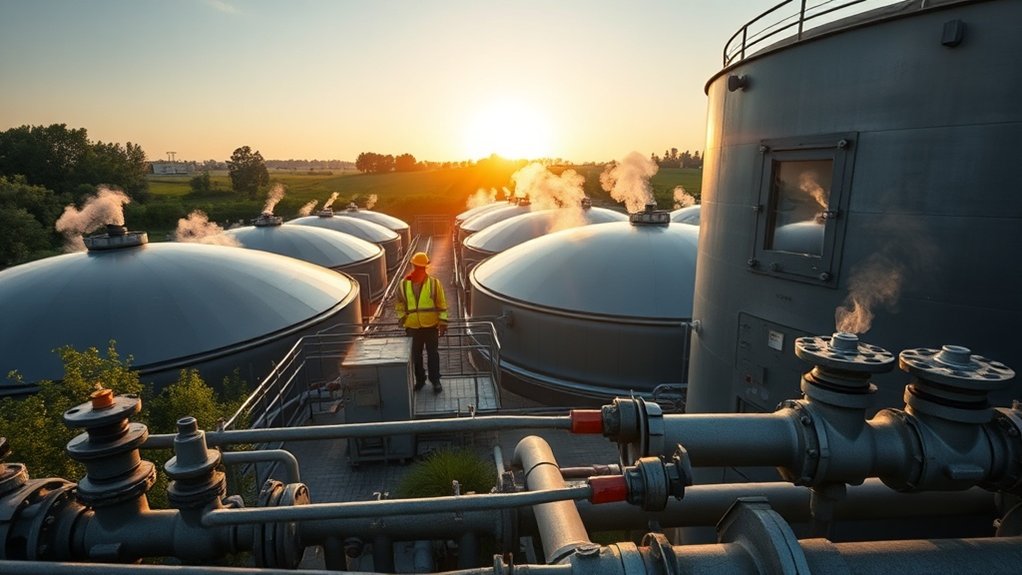
Maximizing the environmental benefits of a biogas plant requires overcoming several operational challenges. You’ll need to maintain ideal temperature between 35-40°C, as fluctuations can inhibit microbial activity and reduce methane yield. Managing feedstock quality is essential; inconsistent or contaminated inputs can cause process imbalances and toxic buildup. You’ll also face issues with digester mixing—poor agitation leads to stratification, impairing digestion efficiency. To solve these, implement precise temperature controls using sensors and automated heating systems. Standardize feedstock preprocessing to guarantee consistent particle size and composition. Use mechanical or gas mixing techniques to promote uniform substrate contact. Regular monitoring of pH, volatile fatty acids, and gas composition helps you detect and correct process deviations early, guaranteeing stable biogas production and maximizing plant performance. Additionally, regular maintenance of systems like ductwork can enhance overall operational efficiency and air quality in the facility.
How to Set Up a Small-Scale Biogas Plant at Home or Farm
When you decide to set up a small-scale biogas plant at home or on your farm, careful planning and understanding of the core components are vital. First, assess the organic waste sources available, such as kitchen scraps, animal manure, or crop residues. Second, select an appropriate digester design—fixed dome, floating drum, or plug flow—that suits your space and budget. Third, guarantee proper installation with airtight sealing and piping to optimize anaerobic digestion and prevent gas leakage. Prioritize maintaining the digester’s ideal temperature and pH levels to maximize methane output. Regular monitoring and feedstock mixing will help maintain efficiency. By following these technical steps, you’ll create a reliable, sustainable energy system tailored to your specific needs, reducing waste and generating valuable biogas. Additionally, consider incorporating decorative elements around the biogas plant to enhance the overall aesthetics of your setup.
Future Innovations for Sustainable Biogas Plants

After setting up a small-scale biogas plant, you might wonder how technology can further enhance its efficiency and sustainability. Future innovations focus on integrating advanced sensors and automation to optimize feedstock digestion and gas yield in real time. You can expect AI-driven control systems that adjust temperature, pH, and mixing dynamically, minimizing energy loss. Additionally, research into genetically engineered microbes aims to accelerate biomass breakdown, increasing methane production. Incorporating renewable energy-powered preprocessing, like solar-assisted shredding, can reduce operational costs. You’ll also see modular designs that allow scalability and easy maintenance. Well-planned renovations will help you not only maximize biogas output but also reduce environmental impact, ensuring your plant remains a viable, sustainable energy solution in the evolving green technology landscape.
Frequently Asked Questions
What Are the Initial Costs of Building a Biogas Plant?
Wondering how much it costs to build a biogas plant? You’ll face initial expenses for land, digester construction, feedstock preparation, and equipment. But with proper planning, you’ll optimize costs and guarantee efficient, sustainable energy production.
How Long Does It Take for a Biogas Plant to Pay Off?
You’ll typically see a biogas plant pay off within 3 to 7 years, depending on scale, feedstock availability, and operational efficiency. Optimizing these factors speeds up return on investment and enhances long-term sustainability.
Can Biogas Plants Reduce Odors From Organic Waste?
Yes, biogas plants considerably reduce odors by anaerobically digesting organic waste, which breaks down odor-causing compounds. You’ll notice less smell compared to raw waste, improving air quality and making waste management more efficient and environmentally friendly.
Are There Any Government Incentives for Biogas Plant Installation?
You’ll find government incentives lighting your path, like tax credits and grants, easing biogas plant installation costs. These policies actively fuel your shift, making green energy investments more financially viable and accelerating sustainable progress.
How Is the Leftover Digestate Used After Biogas Extraction?
You can use leftover digestate as nutrient-rich fertilizer, enhancing soil health and crop yield. It’s an eco-friendly way to recycle waste, reducing chemical fertilizer demand while improving nutrient cycling and organic matter content in your fields.